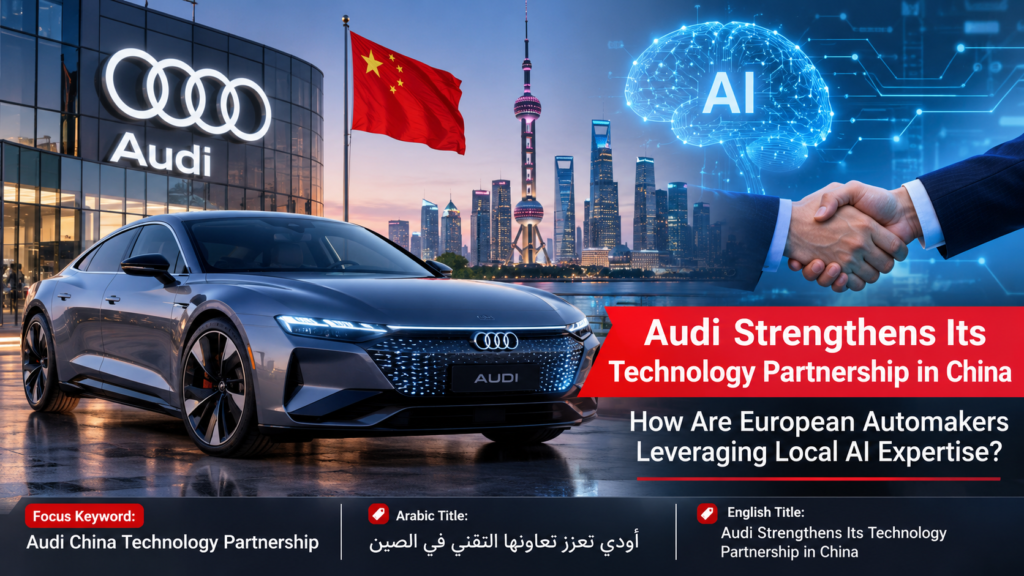
China is no longer just a major car sales market for European automakers. It has become an important hub for developing digital technologies, artificial intelligence, and intelligent driving systems. Amid the rapid transformations taking place across the automotive industry, major European brands, including Audi, are strengthening their partnerships with Chinese companies to benefit from their local expertise and technological capabilities.
This trend reflects a shift in Audi’s strategy in the Chinese market. Its focus is no longer limited to transferring European technology or introducing global models. Instead, the company is increasingly relying on developing technological solutions that meet Chinese consumer expectations and keep pace with the market’s rapid evolution, particularly in artificial intelligence, digital connectivity, and driver assistance systems.
This collaboration raises an important question: Why are European automakers increasingly relying on Chinese expertise, and how could these partnerships reshape the future of competition in the global automotive industry?
Audi Reshapes Its Technology Strategy in China
Audi recognizes that competition in the Chinese automotive market has become different from that of traditional European markets. Chinese consumers place significant importance on digital features, the responsiveness of intelligent systems, and the integration of vehicles with the online services and applications they use every day.
For this reason, the company is seeking to strengthen its technological presence by partnering with local companies that have expertise in software development and digital solutions. This approach helps reduce the time required to develop new technologies and deliver products that better match the characteristics of the local market.
This direction is part of Audi’s broader strategy to adapt to the shift toward software-defined vehicles (SDVs), which rely on continuously updating electronic systems and improving vehicle functions rather than depending solely on mechanical development.
Shanghai Innovation and Technology Center: A Step Toward Local Development
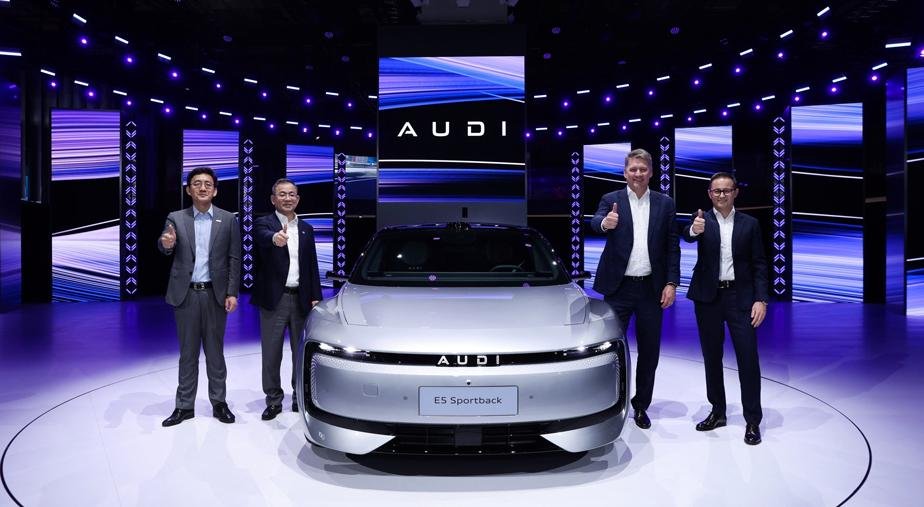
In April 2026, Audi and its Chinese partner SAIC Motor announced an expansion of their strategic cooperation through the establishment of a dedicated innovation and technology center in Shanghai. The center is intended to oversee the development of the next generation of AUDI-branded vehicles designed specifically for the Chinese market.
The center aims to manage the different stages of vehicle development, from initial concept creation and engineering design to preparing models for commercial production. It employs approximately 300 people who work to combine German engineering expertise with China’s digital and technological capabilities.
The center focuses on several key technological areas, including:
- In-Cabin Artificial Intelligence: Developing intelligent assistants capable of understanding driver and passenger requests and providing more natural and personalized responses.
- Advanced Driver Assistance Systems (ADAS): Improving vehicles’ ability to recognize their surroundings and respond to different driving conditions.
- Multimodal Interaction: Combining voice commands, visual information, and other interaction methods to deliver a more advanced user experience.
- Software and Continuous Updates: Developing a digital architecture that allows vehicle functions to be improved and new features to be added through over-the-air (OTA) updates.
One notable aspect of Audi’s strategy is the center’s cooperation with a leading Chinese artificial intelligence and cloud computing platform. The goal is to explore integrating AI models directly into vehicle technology architectures from the earliest stages of development, rather than adding them after the vehicle design has been completed.
Partnership with Momenta to Develop Intelligent Driving Systems
The partnership with Momenta is one of the clearest examples of Audi’s reliance on Chinese expertise in artificial intelligence.
The Chinese company has worked with SAIC Audi to develop advanced driver assistance systems that combine sensor technologies, data processing, and AI algorithms. These systems aim to improve vehicles’ ability to navigate complex traffic conditions and crowded urban roads.
This collaboration was introduced in the AUDI E5 Sportback and later extended to the AUDI E7X electric vehicle. In May 2026, Momenta announced that the model would feature the Audi Panoramic Assisted Driving system, developed in cooperation with SAIC Audi.
The system relies on a range of high-precision sensors and benefits from Momenta’s technologies for analyzing traffic environments and handling different driving scenarios. The company indicated that the system supports advanced driving and parking assistance capabilities, with the possibility of improving its functions through OTA updates.
Momenta also announced that the AUDI E7X would be the first model to offer Level 3 (L3) automated driving capabilities using its technologies. This reflects both companies’ ambition to expand the use of artificial intelligence in premium electric vehicles.
Why Are European Automakers Relying on Chinese AI Expertise?
Audi’s decision to cooperate with Chinese companies is not simply driven by a desire to reduce development costs. Rather, it reflects a broader shift in the global automotive landscape, as China has developed an integrated ecosystem of technology companies, software developers, and electronic component suppliers.
Several key factors explain this growing trend:
Accelerating Development Processes
Chinese technology companies are known for their speed in developing digital products and releasing updates. This helps European brands shorten the time required to develop new systems and keep pace with competitors.
Access to Advanced Artificial Intelligence Technologies
Chinese companies offer expertise in data processing, machine learning, and computer vision. These technologies are essential for developing intelligent driving systems and digital assistants inside vehicle cabins.
Understanding Chinese Consumer Needs
Local partners have a deeper understanding of user behavior and preferences, particularly regarding digital connectivity, in-car entertainment, and smart services. This knowledge helps European automakers introduce products that are better suited to the local market.
Leveraging the Local Supplier Ecosystem
China has an extensive network of companies operating in batteries, semiconductors, sensors, and software. This gives automakers opportunities to develop integrated products by collaborating with multiple technology partners.
How Will China-Europe Cooperation Affect the Future of the Automotive Industry?
The cooperation between Audi and Chinese technology companies represents a new model of relationships between traditional automakers and digital technology developers. Rather than relying entirely on research and development centers based in Europe, companies are increasingly distributing innovation activities across different markets.
This shift is expected to influence competition in the electric and intelligent vehicle sectors, particularly as software and artificial intelligence become essential factors in determining a vehicle’s value and overall user experience.
Such partnerships also give European automakers the opportunity to benefit from China’s rapid pace of innovation while retaining their traditional strengths in engineering, manufacturing quality, safety, and performance.
However, this model also presents several challenges, including intellectual property and data protection, ensuring that locally developed software complies with European safety standards, and managing dependence on external suppliers and partners for critical technologies.
Audi needs to strike a balance between benefiting from Chinese innovations and maintaining its engineering identity and internal standards, particularly given the differences in regulations governing data and automated driving across markets.
Audi Establishes a New Model for Cooperation Between Europe and China
Audi’s strategy in China highlights an important shift in how European automakers operate. Competition is no longer based solely on owning and developing technology internally. The ability to select the right partners and leverage local expertise has become an increasingly influential factor in achieving success.
Through its cooperation with SAIC and Chinese technology companies such as Momenta, Audi aims to combine German automotive engineering expertise with China’s capabilities in artificial intelligence, software, and digital connectivity.
As a result, the impact of these partnerships may extend beyond strengthening Audi’s position in China. They could also provide a model for other European brands seeking to accelerate their transition toward intelligent vehicles amid growing competition from Chinese automakers, which have established a strong presence in developing future mobility technologies.
Frequently Asked Questions
Why is Audi partnering with Chinese technology companies?
Audi aims to benefit from Chinese expertise in artificial intelligence, software, and intelligent driving systems while accelerating the development of vehicles designed for the Chinese market.
What role does Momenta play in its partnership with Audi?
Momenta contributes to the development of driver assistance and intelligent driving systems by leveraging artificial intelligence, data analysis, and sensor technologies.
What is the importance of Audi’s new center in Shanghai?
The center is responsible for developing the next generation of AUDI-branded vehicles designed for China, with a focus on artificial intelligence, intelligent cabins, and driver assistance systems.