The cooling system is one of the most important systems responsible for maintaining a car engine’s efficiency. It regulates engine temperature and prevents it from rising to levels that could damage internal components. However, many car owners find it difficult to choose the right fluid for this system, particularly with the availability of regular water, distilled water, and radiator coolant products with different specifications and colors.
Some drivers may assume that regular water serves the same purpose as coolant as long as it helps reduce engine temperature. However, the difference goes beyond their ability to cool the engine. Radiator coolant contains additional additives that help protect engine components against rust, corrosion, and deposits, while improving the cooling system’s performance under different operating conditions.
So, what is the difference between cooling water and radiator fluid? Can regular water be used as a substitute? And which option provides better engine protection and helps extend its lifespan? This article explores the key differences and offers practical tips to help you choose the right fluid for your car.
What Is the Function of a Car Cooling System?
Before comparing cooling water and radiator fluid, it is important to understand the purpose of the cooling system and how it works.
When an engine is running, the internal combustion process generates a significant amount of heat. If excess heat is not removed, engine temperature may rise to levels that affect operating efficiency and cause damage to internal components.
This is where the cooling system comes in. It consists of several components, including:
- Radiator: Cools the fluid by allowing air to pass through a series of tubes and metal fins.
- Water pump: Circulates coolant through the engine and radiator to maintain continuous fluid flow.
- Thermostat: Regulates coolant flow according to engine temperature.
- Cooling fan: Helps move air through the radiator, especially when the car is stationary or moving at low speeds.
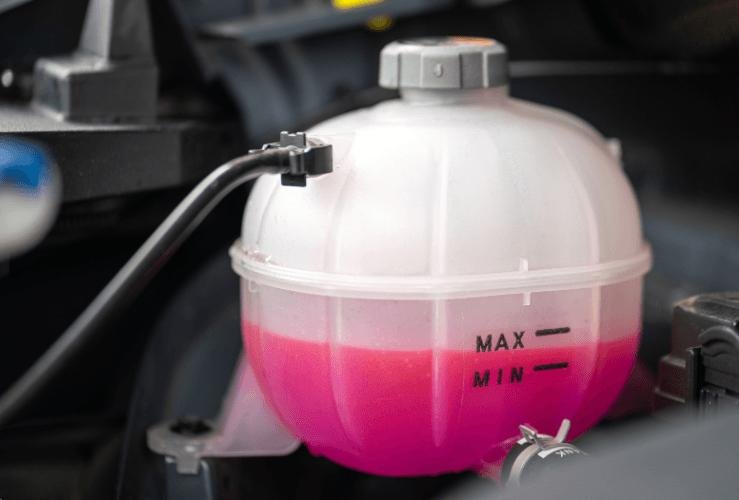
- Cooling hoses: Carry coolant between the engine, radiator, and expansion tank.
These components work together to maintain the engine at an appropriate operating temperature, helping reduce friction, protect metal components, and prevent dangerous overheating.
What Is the Difference Between Cooling Water and Radiator Fluid?
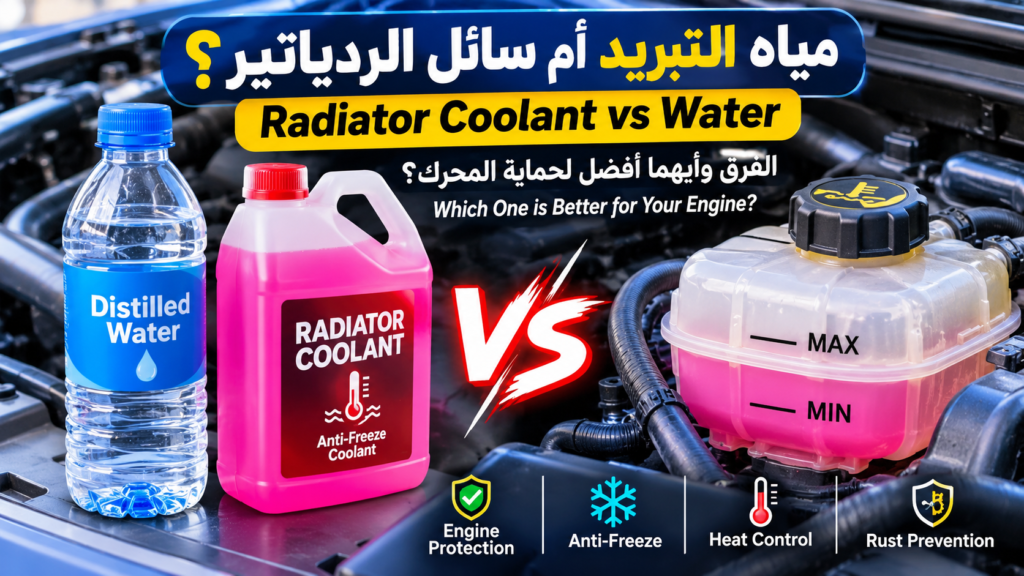
Some drivers use the term “cooling water” to refer to any fluid inside the radiator. However, technically, there are important differences between regular water, distilled water, and coolant specifically formulated for vehicles.
Regular Water
Regular water refers to tap water or water containing dissolved minerals and salts in varying concentrations, depending on its source.
Although it can absorb and transfer heat, using it continuously in the cooling system may cause several problems, particularly when it contains high levels of calcium, magnesium, and other minerals.
Potential disadvantages include:
- The formation of limescale deposits inside cooling passages and the radiator.
- An increased risk of rust and corrosion in metal components.
- The accumulation of deposits that may reduce heat-transfer efficiency.
- Insufficient protection against freezing in low temperatures.
- The absence of specialized additives that protect the water pump and other system components.
For these reasons, tap water is not recommended as a permanent engine-cooling solution, even if no immediate problems appear after its use.
Distilled Water
Distilled water differs from tap water because it is produced through a distillation process that reduces the presence of dissolved minerals and salts.
It is less likely to cause mineral deposits inside the cooling system, which makes it suitable for preparing a mixture with concentrated coolant when the vehicle manufacturer’s instructions specify its use.
However, distilled water alone does not provide complete engine protection. It does not contain the chemical additives needed to prevent corrosion and rust, nor does it offer the same protection against freezing and boiling as specially formulated coolant.
Therefore, it is not a complete substitute for radiator fluid. Instead, it is generally mixed with concentrated coolant according to the manufacturer’s specified ratio.
Radiator Fluid or Coolant
Radiator fluid, also known as coolant, is specifically formulated for use in a vehicle’s cooling system. It typically consists of a base fluid such as ethylene glycol or propylene glycol, combined with water and corrosion-inhibiting additives.
Its formulation varies according to the type of coolant and the specifications set by the vehicle manufacturer. However, it provides several important functions, including:
- Helping prevent engine overheating.
- Raising the mixture’s boiling point compared with water alone when the correct formulation is used in a pressurized system.
- Lowering the freezing point in cold weather.
- Reducing rust and corrosion inside cooling passages.
- Limiting the formation of deposits and scale.
- Helping protect the radiator, water pump, and other cooling system components.
Its importance lies not only in transferring heat but also in helping preserve the condition of cooling system components over the long term.
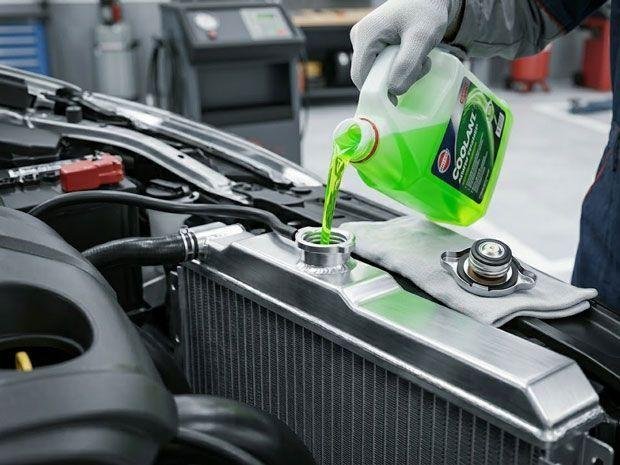
Which Option Is Better for Engine Protection?
When comparing regular water, distilled water, and radiator fluid, coolant that meets the vehicle manufacturer’s specifications is the best choice for continuous use.
Regular water can absorb heat, but it does not provide the necessary chemical protection. The minerals and salts it contains may also contribute to deposit buildup inside the system.
Distilled water is better than tap water in terms of reducing mineral deposits, but it is still insufficient on its own to protect the engine against rust, corrosion, and freezing.
By contrast, radiator coolant formulated according to the vehicle’s specifications provides a balance between heat transfer and component protection, making it the most suitable option for most modern vehicles.
It is important to remember that choosing coolant should not depend on its price or color alone. The product must meet the technical specification recommended by the vehicle manufacturer.
What Types of Radiator Coolant Are Available on the Market?
Several coolant technologies and formulations are available. Their use varies depending on the cooling system’s design and the materials used in its components.
Some of the most common types include:
Inorganic Additive Technology (IAT)
This technology relies on inorganic additives such as silicates and phosphates. It is used in some older vehicles.
It provides protection for cooling system components, but it generally requires shorter replacement intervals than some modern formulations, depending on the manufacturer’s recommendations.
Organic Acid Technology (OAT)
OAT relies on organic corrosion-inhibiting additives and is used in many modern vehicles.
It can provide long-term protection in cooling systems designed for this type of coolant. It also does not rely on some of the traditional additives found in other formulations.
Hybrid Organic Acid Technology (HOAT)
HOAT combines certain organic and inorganic additives to provide suitable protection for the different metals used in cooling systems.
Several formulations are available, so similar names or colors do not necessarily mean that every HOAT product is suitable for every vehicle.
Can Different Types of Radiator Coolant Be Mixed?
Mixing different types of coolant is a mistake that should be avoided, particularly when the products have different chemical compositions or technical specifications.
Mixing incompatible fluids may reduce the effectiveness of corrosion-inhibiting additives or cause deposits and changes in the coolant’s properties, potentially affecting cooling system performance.
Therefore, if you do not know which coolant is currently in your radiator, it is best to consult the vehicle’s owner’s manual or visit a specialized service center to identify the appropriate product.
If you intend to switch to a different coolant type, the system may need to be drained and properly flushed before the new product is added, in accordance with the manufacturer’s instructions.
When Should Radiator Coolant Be Replaced?
There is no single replacement interval that applies to all vehicles. The required interval depends on the coolant type, its formulation, the cooling system’s design, and the vehicle manufacturer’s recommendations.
Some traditional coolants need to be replaced more frequently, while certain modern formulations can last much longer, sometimes for several years.
Several signs may indicate that the coolant needs to be inspected or replaced:
- An unusual color change, such as turning brown or cloudy.
- The appearance of deposits or impurities inside the coolant reservoir.
- Repeated drops in coolant level.
- Engine overheating without an obvious cause.
- Signs of rust or contamination inside the expansion tank.
- Reaching the replacement interval specified in the maintenance schedule.
You should not rely on color alone to determine when coolant needs replacing. The fluid may retain its original color even after some of its protective additives have deteriorated.
Common Mistakes When Handling Coolant
Certain habits can damage the cooling system, even when the correct coolant is being used. Some of the most common mistakes include:
Opening the Radiator Cap While the Engine Is Hot
The cooling system may be under high pressure while the engine is running. Opening the cap in these conditions can release hot coolant or steam, potentially causing serious burns.
Always wait until the engine has cooled completely before opening the radiator cap.
Regularly Adding Tap Water
Some drivers add tap water whenever the coolant level drops. However, repeatedly doing so changes the mixture’s concentration and increases the likelihood of deposit formation.
Ignoring a Low Coolant Level
If the coolant level keeps dropping, this may indicate a leak in the radiator, hoses, water pump, or another part of the system.
Simply adding more coolant is not enough; the underlying cause must be identified and repaired.
Using Coolant That Does Not Meet the Required Specifications
A product may be expensive or come from a well-known brand, but that does not necessarily mean it is suitable for your vehicle’s cooling system.
Always check the required technical specification before purchasing coolant.
Using Concentrated Coolant Without Diluting It
Some coolant products are sold in concentrated form and must be mixed with distilled water according to the ratio specified on the packaging. Others are pre-mixed and ready to use.
It is important to identify which type you have before filling the system.
How to Choose the Right Radiator Coolant for Your Car
Choosing the correct coolant does not require guesswork or experimenting with different products. You can make the right choice by following these steps:
- Check the owner’s manual: Look for the coolant specifications recommended by the vehicle manufacturer.
- Verify the technical specification: Do not rely solely on the technology name, such as OAT or HOAT. Make sure the product meets the required specification.
- Identify the product type: Check whether the coolant is ready to use or supplied in concentrated form and requires dilution.
- Follow the correct mixing ratio: Use the ratio specified by the vehicle manufacturer or coolant product instructions. Do not assume that one ratio is suitable for every vehicle.
- Avoid mixing products: Do not add new coolant to the existing fluid unless you have confirmed that they are compatible.
- Inspect the cooling system: Make sure there are no leaks or faults before filling the system with new coolant.
It is best to have coolant replacement carried out at a specialized service center if the vehicle requires a complete system drain, a cooling system flush, or special equipment to remove trapped air.
Conclusion
Choosing between cooling water and radiator fluid is not simply a matter of price or terminology. It is about how effectively the fluid protects the engine and cooling system against heat, corrosion, and deposits.Regular water is not suitable for permanent use in the radiator, while distilled water alone does not provide the required chemical protection. Coolant that meets the vehicle manufacturer’s specifications remains the best option for maintaining engine efficiency and extending the service life of cooling system components.To ensure optimal performance, always check your vehicle’s owner’s manual, use the approved coolant, monitor the fluid level regularly, and never ignore signs of a leak or engine overheating.
Frequently Asked Questions
Can regular water be used instead of radiator coolant?
Tap water is not recommended for permanent use because it may cause deposits and rust inside the cooling system. It also does not provide the protection against freezing and corrosion offered by specially formulated coolant.
Is distilled water better than radiator coolant?
Distilled water contains fewer minerals and salts than tap water, but it does not contain the additives needed to protect the cooling system. Therefore, it is not a complete substitute for radiator coolant.
Can two different types of radiator coolant be mixed?
Mixing two different coolant types is not recommended unless their specifications and chemical formulations are confirmed to be compatible. It is best to use the coolant recommended by the vehicle manufacturer.