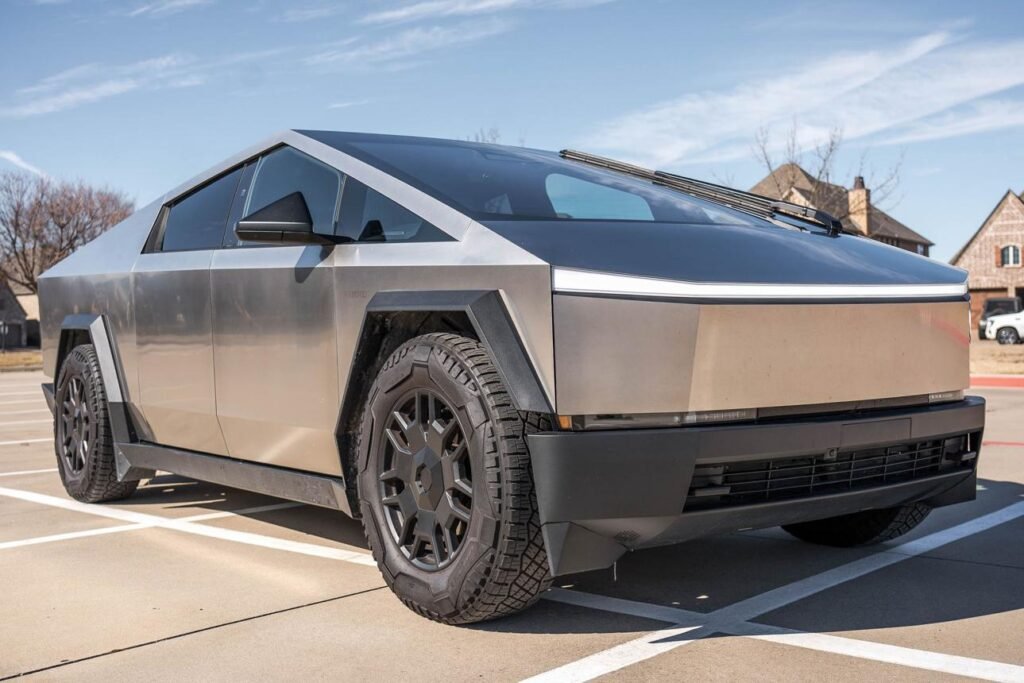
Tesla’s Cybertruck is approaching a critical turning point after CEO Elon Musk announced plans to reduce production of the electric pickup at the company’s Texas factory around mid-2027, making room for increased manufacturing of the self-driving Cybercab.
The announcement has raised questions about the future of the Cybertruck, which was first unveiled in 2019 as one of Tesla’s most ambitious projects. Its unconventional design and stainless-steel exterior attracted considerable attention, but sales have fallen short of the company’s earlier expectations.
Declining Cybertruck Sales Prompt a Change in Strategy
The electric pickup has struggled to attract the number of buyers Tesla initially anticipated, despite the significant attention surrounding its unveiling and commercial launch.
According to Kelley Blue Book data cited by Reuters, Tesla sold approximately 20,237 Cybertrucks in the United States in 2025, compared with around 38,965 units in 2024, representing a decline of nearly 48%.
These figures remain well below Elon Musk’s previous expectations of reaching annual sales of 250,000 units. The model has also faced several recalls and quality-related concerns, alongside pricing challenges compared with other available alternatives.
Cybercab Takes Center Stage in Tesla’s Plans
The planned production reduction is linked to Tesla’s growing focus on autonomous driving technology and electric robotaxis.
The company aims to increase production of the Cybercab, a vehicle designed to operate without a steering wheel or pedals, as part of its broader strategy to expand self-driving transportation services.
This shift reflects a change in Tesla’s manufacturing priorities, with greater emphasis on projects connected to artificial intelligence and autonomous mobility.
Will the Cybertruck Disappear Completely?
Although Tesla has announced plans to reduce production at its Texas facility, Elon Musk has not confirmed that Cybertruck manufacturing will end permanently across all locations. The company has also not announced an alternative factory for continued production.
As a result, the pickup’s future remains dependent on upcoming manufacturing decisions and Tesla’s ability to address challenges related to demand and production costs.
Until further details emerge, the Cybertruck faces an important test that could determine whether it maintains its position in the electric pickup market or gradually gives way to Tesla’s newer projects.