Taking care of a car’s exterior has become a priority for many car owners, especially with constant exposure to sunlight, dust, and scratches caused by everyday use. Weather conditions, bird droppings, and water spots can also affect the appearance of a vehicle’s paint over time. As automotive protection technologies continue to develop, several solutions have emerged to help preserve the original paintwork and minimize potential damage. Among the most popular options are Paint Protection Film (PPF) and ceramic coating.
When considering car paint protection, many owners find it difficult to choose between these two technologies. Although both aim to preserve a vehicle’s appearance and reduce the impact of external factors, they differ significantly in how they work and the level of protection they provide.
Understanding the difference between PPF and ceramic coating can help you make the right decision based on your car’s needs, driving habits, and available budget, rather than assuming that one technology offers complete protection against every type of damage.
In this article, we explore the difference between PPF and ceramic coating in detail, including how each technology works, its main advantages and disadvantages, expected costs, and which option is best for maintaining your car’s paint.
What Is PPF for Car Paint Protection?
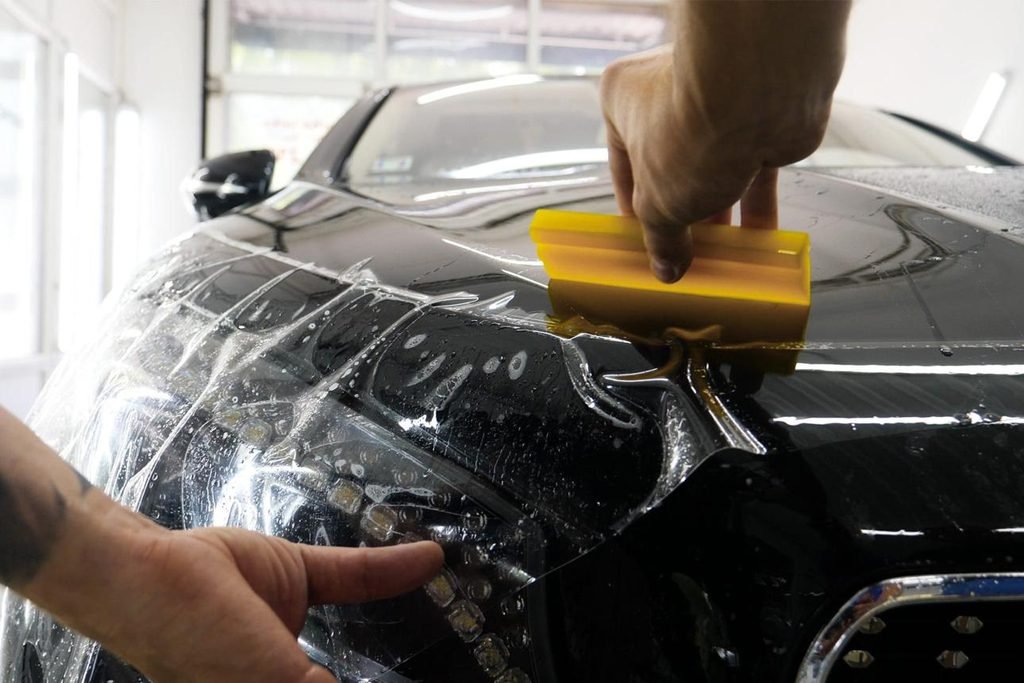
PPF stands for Paint Protection Film. It is a transparent protective film designed to shield a car’s paint from scratches, friction, and external elements that may damage the original paintwork.
Modern, high-quality PPF products are typically made from thermoplastic polyurethane (TPU). The film is installed over selected areas of the vehicle’s exterior, creating a physical barrier between the original paint and potential sources of damage.
The importance of PPF lies in its ability to provide more than just an improved appearance. It acts as a physical protective layer that absorbs part of the impact caused by minor scratches, friction, and surface-level contact. This makes it particularly suitable for areas that are more exposed to damage, such as the front bumper, hood, and side mirrors.
Some advanced PPF products also feature self-healing technology, which helps minor surface scratches disappear when exposed to heat from sunlight or warm water, depending on the manufacturer’s instructions.
However, this feature does not mean that the film can repair cuts, deep scratches, or damage that reaches the original paint underneath.
What Is Ceramic Coating for Cars?
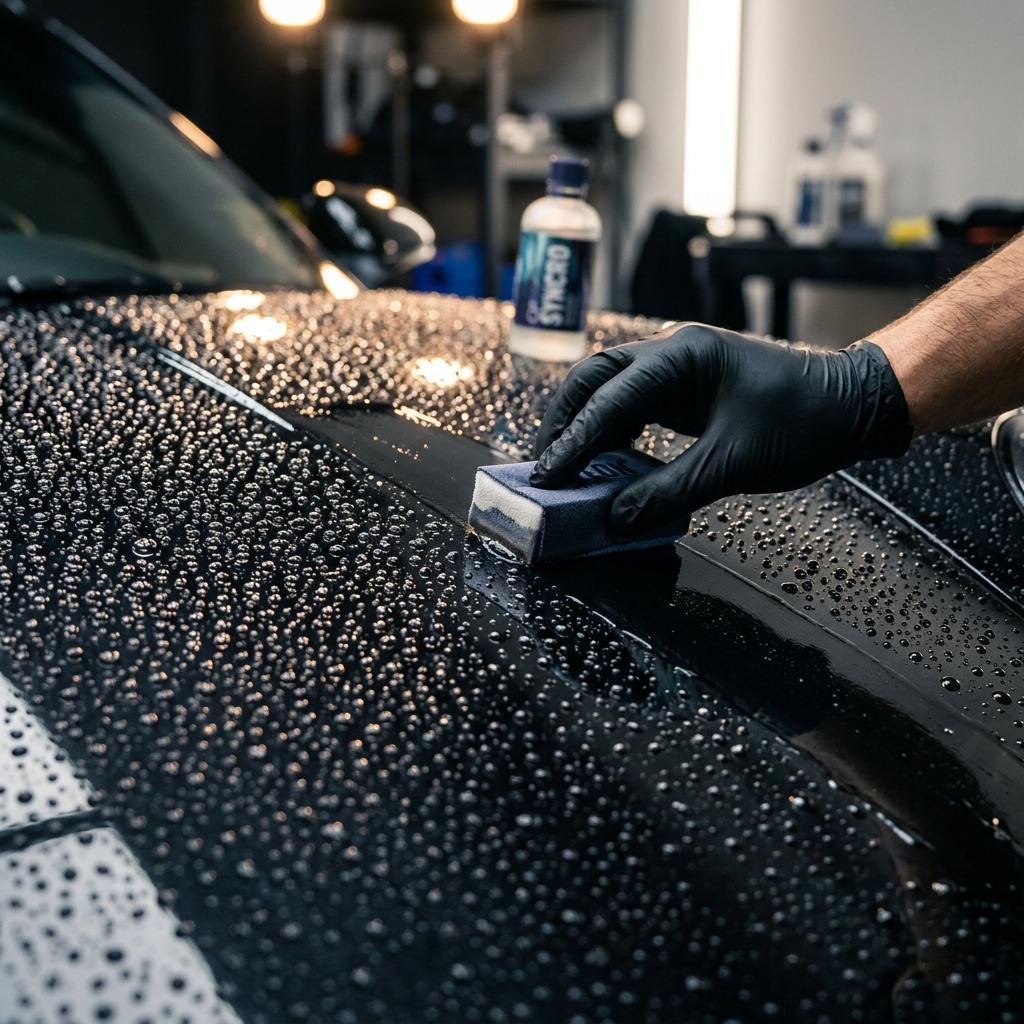
Ceramic coating is a liquid protective treatment applied to a vehicle’s exterior after the surface has been properly cleaned and prepared. It typically contains chemical compounds based on silica, such as silicon dioxide, although its composition and performance vary depending on the product and manufacturer.
Once applied and fully cured, ceramic coating forms a thin protective layer that bonds with the paint surface, helping improve its resistance to certain contaminants and environmental factors.
One of the main functions of ceramic coating is to make the car’s surface more water-repellent and reduce the amount of dirt that sticks to it. This makes washing easier and helps keep the exterior cleaner for longer.
Ceramic coating can also enhance paint gloss and improve color depth, especially when applied after professional paint polishing to remove existing surface imperfections.
However, it is important to understand that ceramic coating is not a replacement for paint protection film. It does not create a thick physical barrier capable of absorbing strong impacts or protecting the paint from stone chips in the same way that PPF does.
PPF vs. Ceramic Coating: Differences in Protection Methods
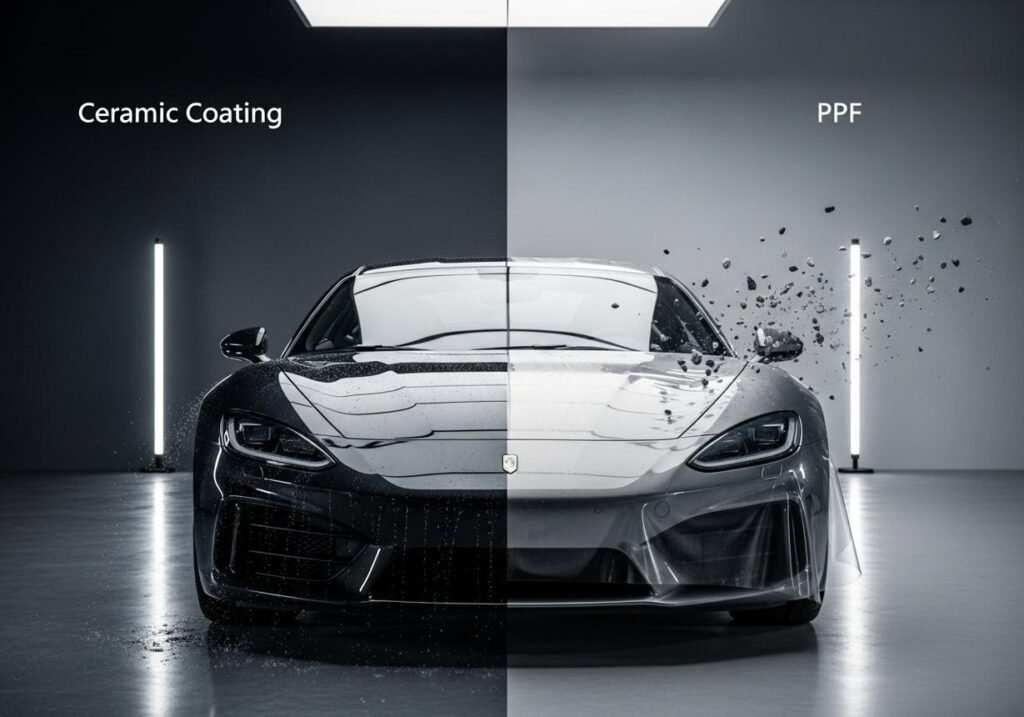
The main difference between these two technologies lies in the type of protective layer applied to the car’s paint and the function it performs.
PPF: Works as a relatively thick physical protective layer that helps absorb the impact of minor scratches, friction, flying gravel, and certain surface-level impacts.
Ceramic Coating: Works as a thin chemical layer that enhances the properties of the paint surface. It helps repel water, reduce dirt and contaminant buildup, improve gloss, and make cleaning easier.
Therefore, if your main goal is to reduce the risk of paint damage caused by road debris, flying gravel, and everyday friction, PPF is generally the more suitable option.
On the other hand, if you want to improve your car’s appearance, reduce the buildup of dust and water spots, and make cleaning easier, ceramic coating offers a practical solution.
Comparing the Advantages of PPF and Ceramic Coating
Each technology offers different benefits that make it suitable for specific needs. Here are the main advantages of both options.
Advantages of PPF
Protection Against Stone Chips: PPF helps reduce the impact of flying gravel and small road debris on the original paint, particularly when driving on highways.
Reduced Surface Scratches: The film creates a barrier against many minor scratches caused by everyday contact, parking, and cleaning.
Self-Healing Technology: Some advanced products feature a top layer that allows minor scratches to disappear when exposed to heat.
Preserving Original Paint: PPF reduces the likelihood of direct paint damage, helping maintain the vehicle’s exterior condition.
Different Finishing Options: PPF is available in glossy and matte finishes, allowing owners to preserve the original appearance or change the vehicle’s exterior look without repainting it.
Replacing Damaged Sections: If a specific section of the film becomes damaged, it can often be removed and replaced without treating the entire vehicle again.
Advantages of Ceramic Coating
Enhanced Paint Gloss: Ceramic coating improves the depth and shine of the paint color, particularly when the surface is properly prepared and polished beforehand.
Water Repellency: It creates a hydrophobic surface that causes water to form beads and slide off the vehicle’s exterior more easily.
Easier Cleaning: It reduces the adhesion of certain types of dirt and contaminants, making car washing more convenient.
Resistance to Certain Chemical Contaminants: It helps reduce the impact of bird droppings, tree sap, and some environmental contaminants, provided they are cleaned promptly rather than left on the surface for extended periods.
Reduced Environmental Damage: Some formulations offer improved resistance to UV rays, oxidation, and certain types of surface discoloration.
Maintaining the Car’s Appearance: With proper washing and maintenance, ceramic coating helps keep the vehicle looking clean and glossy.
Disadvantages of PPF and Ceramic Coating
Although both technologies provide valuable car paint protection, each has certain drawbacks that should be considered before making a decision.
Disadvantages of PPF
- High Cost: High-quality PPF is relatively expensive, especially when covering the entire vehicle rather than protecting only the front sections.
- Requires Professional Installation: Installing PPF requires skill and experience to handle curves, edges, and different body panels. Poor installation may result in bubbles, wrinkles, or uneven edges.
- Potential Appearance Changes: Some low-quality films may turn yellow or lose their transparency over time.
- Maintenance Requirements: Installing PPF does not eliminate the need for regular washing and care. Dirt can still accumulate on the surface, and certain stains may require appropriate treatment.
- Damage from Improper Installation or Removal: Using low-quality materials or removing the film incorrectly may damage the paint, particularly if the vehicle has previously been repainted.
Disadvantages of Ceramic Coating
- Does Not Protect Against Physical Impacts: Ceramic coating cannot absorb the impact of flying gravel or prevent deep scratches and heavy friction.
- Requires Paint Preparation: If the vehicle has scratches, swirl marks, or other imperfections, paint correction and polishing may be necessary before applying the coating.
- Different Product Quality Levels: The performance of ceramic coatings varies depending on their chemical formulation and manufacturer. Not all products provide the same level of protection.
- Ongoing Maintenance: Maintaining the coating’s properties requires following proper washing instructions and using suitable cleaning products.
- Limited Lifespan: Its protective properties gradually decline due to regular use and environmental exposure, meaning reapplication may be necessary once the coating reaches the end of its effective lifespan.
Which Is Better for Scratch Resistance?
One of the most common questions car owners ask when comparing PPF and ceramic coating is how effectively each technology protects against scratches.
In this area, PPF has a clear advantage because it consists of a relatively thick and flexible layer installed over the original paint. It absorbs part of the friction and external impact before these forces reach the vehicle’s paintwork.
This feature becomes particularly important when driving through congested roads or behind trucks and other vehicles that may throw up gravel and small stones. It also helps reduce the risk of scratches caused by contact with surrounding objects while parking.
Although some ceramic coating products are marketed as scratch-resistant, this does not mean they can prevent scratches caused by keys, stones, or strong friction. Their primary role is to improve the surface’s resistance to certain environmental and chemical effects rather than provide physical impact protection.
Therefore, if your main priority is reducing the risk of scratches and friction-related damage to your car’s paint, PPF offers more suitable protection.
PPF vs. Ceramic Coating: Which Lasts Longer?
The lifespan of each technology depends on product quality, installation methods, driving conditions, and maintenance.
PPF Lifespan
High-quality paint protection films can last for several years. Depending on the manufacturer’s specifications and warranty, some products may offer a lifespan ranging from 5 to 10 years.
Several factors affect how long the film remains effective, including continuous exposure to sunlight, film quality, car washing methods, and compliance with maintenance instructions.
Ceramic Coating Lifespan
The lifespan of ceramic coating varies depending on the product, the number of layers applied, and the installation process. Some professional-grade products may last from one year to several years.
However, it is important not to rely solely on advertised figures. The continued presence of water-repellent properties or surface gloss does not necessarily mean that the coating still provides all its advertised protective benefits.
It is therefore advisable to review the product specifications and actual warranty conditions before choosing a coating. You should also check whether the advertised lifespan assumes normal use or requires regular maintenance at a professional detailing center.
Can You Apply PPF and Ceramic Coating Together?
Yes. PPF and ceramic coating can be used together, and combining both technologies is considered an effective way to provide different but complementary levels of car paint protection.
The process involves installing PPF on the areas that require physical protection first. Once the film has been properly installed and secured, a compatible ceramic coating can be applied according to the manufacturer’s instructions.
Combining both technologies allows you to benefit from their individual functions. PPF provides physical protection against gravel, friction, and minor scratches, while ceramic coating adds water-repellent properties, reduces dirt buildup, and makes cleaning easier.
Some of the main benefits of combining both technologies include:
- Protecting areas most exposed to friction and road debris with PPF.
- Enhancing paint gloss and maintaining the vehicle’s appearance.
- Making car washing and dirt removal easier.
- Benefiting from the water-repellent properties of ceramic coating.
- Reducing the paint’s exposure to various external elements.
However, it is essential to choose a ceramic coating that is compatible with the type of PPF being used. The coating should not be applied until the film has been fully installed and cured according to the manufacturer’s instructions.
Which Areas of Your Car Need PPF?
If your budget does not allow you to cover the entire vehicle with PPF, you can focus on the areas most exposed to scratches and flying gravel.
The most important areas include:
- Front Bumper: It is constantly exposed to gravel and small objects while driving, making it one of the most important areas to protect.
- Hood: The hood is particularly vulnerable to flying stones and road debris, especially at higher speeds.
- Side Mirrors: These areas are exposed to scratches and friction in narrow parking spaces and congested roads.
- Headlights: Specially designed protective film can help reduce scratches and surface damage, provided it is compatible with the headlight material and does not affect light output.
- Lower Side Panels Near the Wheels: These sections are exposed to water spray, gravel, and dirt thrown up from the road.
- Door Sills and Door Handles: These areas are frequently scratched by shoes, keys, and repeated contact when entering and leaving the vehicle.
You can choose to cover the entire front end or add protection to selected side panels, depending on your driving habits and how exposed your car is to potential damage.
Which Is Better for New and Used Cars?
Choosing between PPF and ceramic coating depends on the vehicle’s paint condition and how the car is used, rather than its model year alone.
Protecting New Cars
New cars are among the best candidates for PPF because their original paint is generally in good condition and has not yet been exposed to years of everyday use.
You can install PPF on the front of the vehicle and other areas that are more vulnerable to gravel and friction. Ceramic coating can also be added to enhance gloss and make cleaning easier.
Ideally, paint protection should be installed after confirming that the paint is in good condition and does not have any imperfections that require correction.
Protecting Used Cars
For used vehicles, the first step should always be inspecting the paint condition before choosing a protection method.
If the vehicle has minor scratches or swirl marks caused by repeated washing, it may require polishing and paint correction before applying ceramic coating or installing PPF.
If certain panels have been repainted, you should inform the protection center beforehand. Installing or removing PPF on non-original paint requires a more careful assessment to avoid peeling or paint damage
How Much Does PPF and Ceramic Coating Cost?
The cost of protecting a car’s paint with PPF or ceramic coating varies from one detailing center to another. There is no fixed price for all vehicles because the final cost depends on several factors.
Factors Affecting PPF Costs
- Film type and manufacturer.
- Film thickness and material quality.
- The total area that needs to be covered.
- Whether you choose front-end protection or full-body coverage.
- The installers’ experience and installation precision.
- Warranty duration and coverage conditions.
Full-body PPF installation is generally more expensive than protecting only the front bumper, hood, and side mirrors.
Factors Affecting Ceramic Coating Costs
- Product quality and chemical formulation.
- Number of coating layers and application method.
- Vehicle size and total exterior surface area.
- Paint condition and the amount of polishing required.
- Advertised protection period and warranty.
- Preparation quality and additional services provided by the detailing center.
In general, ceramic coating costs less than covering an entire vehicle with PPF. However, any price comparison should take into account the different purposes and levels of protection offered by each technology.
Important Tips Before Installing PPF or Ceramic Coating
Before deciding how to protect your car’s paint, consider the following tips to avoid problems caused by unsuitable products or poor installation.
- Choose a Specialized Detailing Center: Work with a center that has experience installing PPF and applying ceramic coating. Ask to see examples of its previous work.
- Check Product Quality: Do not make your decision based on price alone. Ask about the manufacturer, technical specifications, and materials used.
- Inspect the Paint Before Installation: Make sure there are no deep scratches, peeling areas, or other defects that need to be treated before the installation begins.
- Understand the Warranty Conditions: Check the warranty duration and what it covers. Find out whether it includes yellowing, cracking, or film edge lifting.
- Follow Maintenance Instructions: Washing and drying requirements may differ after PPF installation or ceramic coating application. Always follow the instructions provided by the detailing center and manufacturer.
- Avoid Unrealistic Promises: No technology can make car paint completely immune to every type of scratch or impact. It is important to understand the actual protection limits of the product.
How to Choose Between PPF and Ceramic Coating?
To select the right technology, first identify the type of damage you want to prevent and the results you expect from the protection treatment.
Choose PPF If You:
- Frequently drive long distances.
- Use highways where gravel and small road debris are common.
- Want to reduce the risk of scratches to your original paint.
- Own a new car and want to preserve its factory paintwork.
- Have a larger budget available for exterior paint protection.
Choose Ceramic Coating If You:
- Care about your car’s gloss and overall appearance.
- Want to make washing and cleaning easier.
- Want to reduce the buildup of dust and contaminants.
- Mainly use your car for everyday city driving.
- Are looking for a more affordable option than full-body PPF coverage.
If you want to benefit from both technologies, you can combine them by installing PPF on the areas most exposed to damage and then applying a compatible ceramic coating over the film and the remaining painted surfaces.
Final Verdict: PPF or Ceramic Coating?
PPF and ceramic coating should not be considered competing technologies that perform exactly the same function. Each plays a different role in protecting car paint and maintaining the vehicle’s exterior appearance.
PPF is the more suitable choice for drivers who want a physical barrier that reduces the impact of flying gravel, friction, and minor scratches. Ceramic coating, on the other hand, is ideal for those who prioritize paint gloss, easier cleaning, and resistance to certain contaminants and environmental factors.
Ultimately, choosing the right technology depends on your budget, driving habits, and vehicle condition. Working with a specialized detailing center and selecting reliable, high-quality products are essential steps toward achieving the best possible results.
Frequently Asked Questions
Is PPF better than ceramic coating for car paint protection?
Yes, if your main goal is protection against flying gravel, friction, and minor scratches, PPF provides better physical protection. Ceramic coating, however, is more effective at repelling water, enhancing gloss, and making cleaning easier.
Can ceramic coating be applied over PPF?
Yes, ceramic coating can be applied over PPF, provided that the product is compatible with the type of film used and the application takes place after the film has been fully installed and cured according to the manufacturer’s instructions.
Does ceramic coating prevent car scratches?
No. Ceramic coating does not prevent deep scratches or damage caused by strong friction. It may offer limited resistance to minor surface marks, but it should not be considered a replacement for PPF.