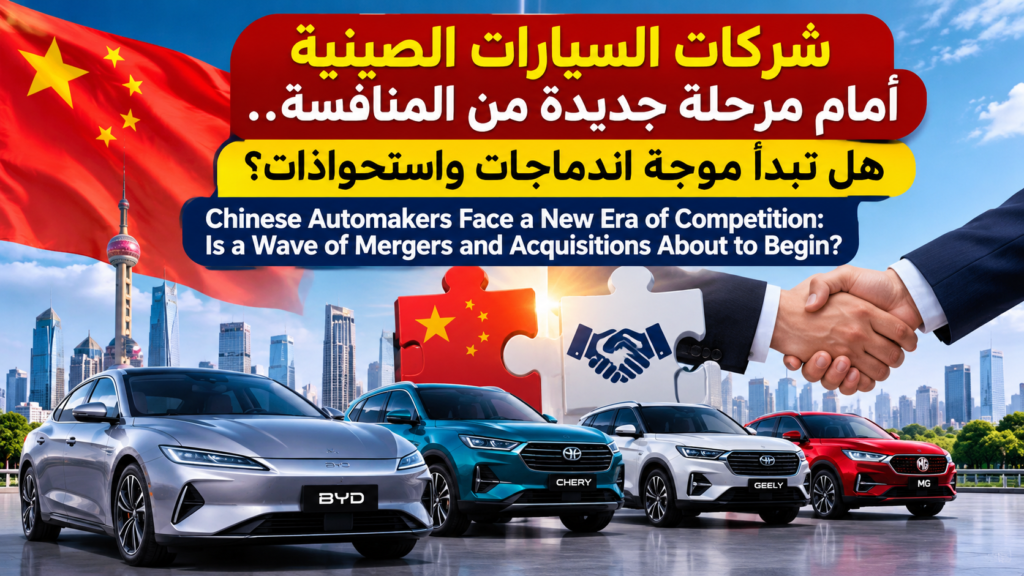
China’s automotive industry is preparing to enter a new phase of competition, as manufacturers face growing pressure from rising supply, declining domestic sales, and an ongoing price war. These challenges are raising the possibility of mergers and acquisitions that could reshape the industry’s competitive landscape in the coming years.
Growing Number of Automakers Intensifies Competition in China
China’s automotive market is home to more than 100 car manufacturers, supported by rapid expansion in electric and hybrid vehicle production and the launch of an increasing number of new models. However, this growth has been accompanied by production capacity exceeding market demand, intensifying competition and putting pressure on profit margins across the industry.
Market data indicates that new vehicle sales in China fell by around 20% in the first half of 2026, highlighting the challenges facing manufacturers, particularly those struggling to establish a strong customer base or achieve sustainable profitability.
New Moves Toward Mergers and Restructuring
Against this backdrop, signs are emerging that the industry is moving toward restructuring through cooperation agreements and potential business consolidation. Among the notable developments are cooperation arrangements announced between Guangzhou Automobile Group (GAC) and FAW Group, alongside efforts to reorganize certain joint ventures associated with Toyota’s vehicle production in China.
Global Markets Add to Competitive Pressures
The challenges are not limited to the domestic market. International markets, particularly Europe, have become important testing grounds for Chinese automakers seeking to expand their global presence.
New automotive brands face several obstacles, including distribution costs, maintenance expenses, after-sales services, and competition from established international manufacturers.
Will China’s Automotive Industry Witness a Wave of Acquisitions?
China is expected to encourage mergers and restructuring efforts to address underutilized production capacity and strengthen manufacturers with greater potential to compete globally.
As a result, the next phase may not simply be about increasing sales or launching new models. Instead, it could become a real test of automakers’ ability to achieve profitability and maintain their market positions, with some brands potentially exiting the market or merging with larger automotive groups.