The automatic transmission is one of the most important systems responsible for transferring engine power to the wheels. It controls gear changes according to the vehicle’s speed and driving conditions without requiring constant driver input. However, with daily use and the passage of time, its components may experience wear or develop faults that affect its efficiency and the vehicle’s overall response.
The main concern with automatic transmission problems is that ignoring early warning signs can cause the damage to worsen and increase repair costs. Even relatively minor issues, such as low transmission fluid levels or deteriorating fluid quality, can lead to more serious damage if they are not addressed promptly.
Therefore, it is important to pay attention to any unusual changes in your car’s performance, whether when shifting gears, accelerating, or coming to a stop. In this article, we explore eight signs of a weak automatic transmission and explain how to distinguish between minor symptoms and problems that require urgent professional inspection.
What Causes an Automatic Transmission to Weaken?
Before looking at the warning signs of a weak automatic transmission, it is useful to understand the factors that can reduce its efficiency. Transmission problems are not always related to vehicle age; some faults can develop because of operating conditions or neglected routine maintenance.
The most common potential causes include:
- Low transmission fluid levels or leaks within the system.
- Using transmission fluid that does not meet the manufacturer’s specifications.
- Repeated overheating of the transmission.
- Wear of internal components responsible for transferring power and changing gears.
- Faults in the transmission valves or electronic control unit.
- Aggressive driving and repeatedly overloading the vehicle.
- Delaying fluid changes or neglecting the recommended maintenance schedule.
8 Signs of a Weak Automatic Transmission
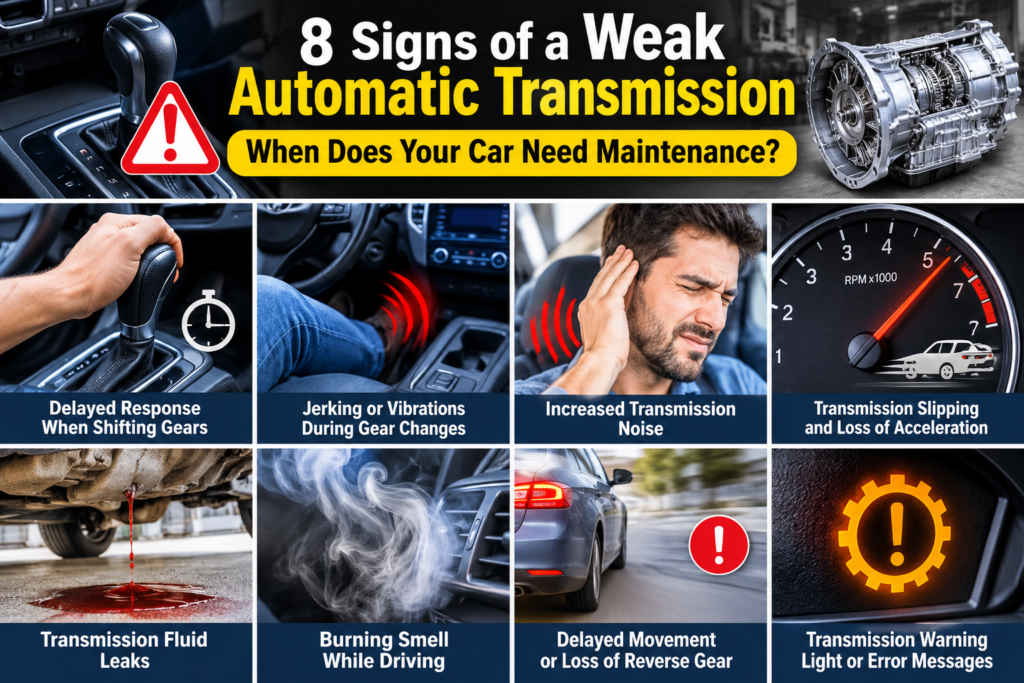
Several symptoms can alert you to a potential problem with your automatic transmission. One or more of these signs may appear at the same time, and it is important not to ignore them, as doing so could allow the problem to become more serious.
Delayed Response When Shifting Gears
If you notice a significant delay when moving the gear selector from Park (P) to Drive (D) or Reverse (R), this could indicate a transmission problem.
The transmission should engage within a short period. However, if it takes several seconds before the vehicle starts moving, this may point to low transmission fluid pressure, a hydraulic system malfunction, or problems with certain internal components.
This delay should not be considered normal if it happens repeatedly, particularly when accompanied by poor vehicle response or unusual noises.
Jerking or Vibrations During Gear Changes
One of the common signs of a weak automatic transmission is noticeable jerking or vibration when the vehicle shifts from one gear to another.
Instead of changing gears smoothly, you may feel a slight jolt or sudden movement inside the vehicle, either during acceleration or when slowing down.
This problem may be related to deteriorating transmission fluid quality, a fault in the control unit, or malfunctioning valves responsible for regulating fluid pressure. It can also result from wear in certain internal components.
If these jerks become more frequent or severe, it is best to have the transmission inspected rather than simply changing the fluid without identifying the underlying cause.
Increased Transmission Noise or Unusual Sounds
Sounds coming from the transmission can be an important indication of a mechanical problem, especially if they were not present before.
You may hear a continuous humming or whining noise while driving, or clicking and grinding sounds when changing gears. The type of noise can vary depending on the nature and source of the problem.
In some cases, humming may be associated with low fluid levels or problems with the transmission pump or bearings, while metallic grinding noises may indicate damage to internal components.
These sounds should not be ignored, as continued driving with abnormal friction can lead to further damage and higher repair costs.
Transmission Slipping and Loss of Acceleration
Transmission slipping is one of the warning signs that requires attention. It occurs when engine RPM increases without a corresponding increase in the vehicle’s speed.
In other words, when you press the accelerator, you may notice that the engine revs higher and becomes louder, but the vehicle does not accelerate as expected.
This can happen because of low transmission fluid pressure, worn internal clutch plates, or problems with the gear control system.
The situation becomes more serious when slipping occurs repeatedly while driving or is accompanied by a sudden loss of power. In this case, the vehicle should be inspected as soon as possible, and excessive pressure on the accelerator should be avoided.
Transmission Fluid Leaks Under the Vehicle
A transmission fluid leak is another warning sign that should never be ignored. Transmission fluid plays an essential role in lubricating and cooling internal components, as well as operating the hydraulic systems found in many automatic transmissions.
A leak may become noticeable through fluid spots underneath the vehicle after it has been parked. Transmission fluid can be red, pink, or brown, although its color varies depending on the type of fluid used and its condition.
Potential causes include damaged gaskets or rubber seals, as well as problems with fluid cooling lines or connections.
If you notice fluid spots beneath your car, it is important to identify their source quickly. Do not automatically assume that the leak is coming from the transmission before having it inspected, as it could originate from the engine or another vehicle system.
Burning Smell While Driving
A burning smell is a warning sign that requires vehicle inspection, particularly if it appears alongside rising transmission temperatures or jerking during gear changes.
This smell may result from transmission fluid overheating because of low fluid levels, deteriorating fluid properties, or excessive friction between internal components.
High temperatures can reduce the fluid’s effectiveness and its ability to protect different components, increasing the risk of internal damage if the vehicle continues operating under these conditions.
Therefore, if you notice an unusual burning smell, it is best to stop in a safe location and arrange for a vehicle inspection, especially if warning messages also appear on the dashboard.
Delayed Vehicle Movement or Loss of Reverse Gear
If you shift the transmission into Drive (D) or Reverse (R) and the vehicle does not move as expected, this could indicate a fault in the transmission system.
You may notice that the vehicle responds very slowly, moves intermittently, or loses its ability to reverse despite selecting the correct gear.
Potential causes include low transmission fluid pressure, faulty internal valves, gear assembly problems, or electronic control component malfunctions.
In some cases, the issue may be related to sensors or other systems that affect transmission response. Therefore, a professional diagnosis is necessary before deciding on the appropriate repair.
Transmission Warning Light or Error Messages
Modern vehicles are equipped with electronic systems that monitor transmission performance. These systems can alert the driver when they detect problems involving temperature, fluid pressure, sensors, or gear-shifting control.
A warning light may appear on the dashboard, or a message may indicate that the transmission needs inspection. The Check Engine light may also illuminate when certain transmission-related faults are recorded.
In this situation, it is recommended to use an On-Board Diagnostics (OBD) scanner to read the fault codes and identify the source of the problem instead of replacing parts based on guesswork.
A warning light does not necessarily mean that the entire transmission is damaged. The cause could be an electronic malfunction or another issue that can be repaired without replacing the complete transmission.
When Does an Automatic Transmission Need Maintenance?
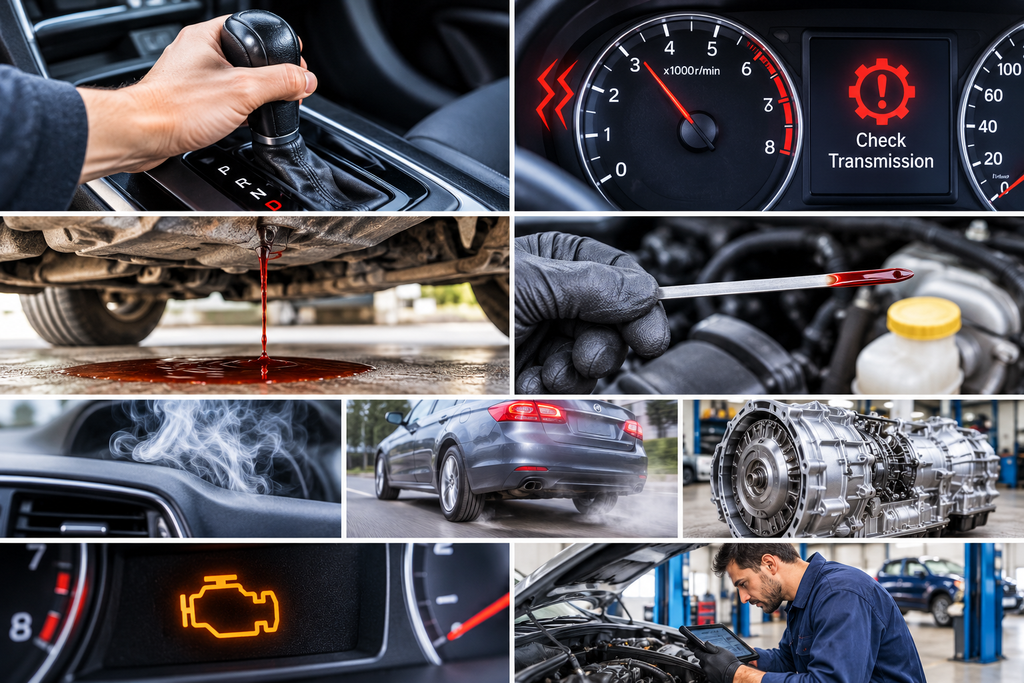
There is no single maintenance interval that applies to every vehicle when it comes to changing automatic transmission fluid or servicing the system. Maintenance schedules vary depending on the transmission type, design, manufacturer’s recommendations, and driving conditions.
For this reason, you should consult your vehicle’s owner’s manual to determine when the transmission fluid needs to be inspected or replaced. Always make sure to use the fluid type and specifications approved by the manufacturer.
In general, your transmission should be inspected in the following situations:
- When you notice repeated delays when shifting between driving modes.
- If unusual jerking or vibrations occur during gear changes.
- When you notice fluid leaking underneath the vehicle.
- If the transmission overheats or a warning message appears.
- When unusual noises occur while driving.
- If you experience transmission slipping or a sudden loss of acceleration.
- When the maintenance interval specified in the owner’s manual approaches.
If the vehicle loses its ability to move, experiences severe transmission slipping, or develops a strong burning smell accompanied by an overheating warning, it is best to stop in a safe location and avoid continuing to drive. Seek professional assistance or have the vehicle transported to an appropriate service center.
How to Maintain an Automatic Transmission and Reduce the Risk of Problems
You can reduce the chances of automatic transmission problems by following proper driving habits and adhering to the recommended maintenance schedule.
Some of the most important tips include:
- Follow the recommended fluid change intervals: Check and replace the transmission fluid according to the manufacturer’s recommendations rather than relying on general intervals that may not suit every vehicle.
- Use the correct transmission fluid: Make sure the fluid meets the technical specifications required for your vehicle, as using the wrong type can affect transmission performance.
- Avoid shifting gears while the vehicle is moving: Never shift from Drive (D) to Reverse (R) or Park (P) before bringing the vehicle to a complete stop.
- Allow the vehicle a moment before driving: Give the car a short moment after starting the engine, particularly in cold weather, to allow its operating systems to stabilize, while following the manufacturer’s instructions.
- Avoid overloading the vehicle: Do not exceed the vehicle’s permitted load capacity or tow trailers beyond its approved limits.
- Watch for fluid leaks: Have the vehicle inspected whenever you notice fluid spots underneath it, and do not delay addressing the leak.
- Avoid repeated aggressive driving: Sudden acceleration and continuous heavy demands on the engine and transmission can increase thermal and mechanical stress on vehicle components.
Can You Drive a Car with a Weak Automatic Transmission?
Whether you can continue driving depends on the nature and severity of the problem. Some minor issues may allow you to drive a short distance to a service center, but other faults make continued driving unsafe.
If the only issue is a warning that requires inspection, with no other symptoms, you can consult the owner’s manual and arrange for a professional diagnosis as soon as possible.
However, if the transmission is slipping severely, the vehicle loses its ability to transfer power, the transmission overheats, or there is a significant fluid leak, you should stop driving to prevent further damage.
It is also not recommended to deal with the problem by randomly adding more transmission fluid or using unapproved additives. Overfilling the transmission or using an unsuitable product can create additional problems.
Conclusion
The automatic transmission is one of the most important systems affecting vehicle performance and driving smoothness. Paying attention to early warning signs of transmission problems can help you identify faults before they become more serious and lead to expensive repairs.From delayed gear changes and jerking to fluid leaks and transmission overheating, several symptoms deserve attention and should not be ignored. Follow the recommended maintenance schedule, use the correct transmission fluid, and consult a qualified technician whenever unusual symptoms appear to maintain transmission efficiency and extend its service life.
Frequently Asked Questions
What Are the Most Common Signs of Automatic Transmission Failure?
The most common signs include delayed gear engagement, jerking or vibrations, transmission slipping, fluid leaks, and unusual noises or burning smells.
Can Low Automatic Transmission Fluid Cause Jerking?
Yes. Low transmission fluid levels can reduce hydraulic pressure and interfere with smooth gear changes, resulting in jerking or delayed responses. If the fluid shortage continues, it may also lead to more serious damage.
Can an Automatic Transmission Be Repaired Without Replacing the Entire Unit?
Yes. It depends on the nature of the fault and the extent of the damage. The problem may be related to fluid leaks, sensors, valves, or the control unit, and some of these issues can be repaired without replacing the entire transmission. However, significant internal damage may require a complete rebuild or replacement of the unit.