Discover the most common turbocharger maintenance mistakes that lead to early failure. Learn how to protect your turbo engine and extend its lifespan with expert tips from DrMechaNest.
Turbocharged engines are now widely used in modern vehicles because they deliver more power with better fuel efficiency.
However, turbochargers operate under extreme heat and pressure, making them highly sensitive to poor maintenance.
A small mistake can lead to complete turbo failure — and repairs are often expensive.
In this guide from DrMechaNest, you’ll learn:
- How a turbocharger works
- The most common mistakes that destroy it
- Warning signs of turbo failure
- How to extend your turbo’s lifespan
🚀 How Does a Turbocharger Work?
A turbocharger uses exhaust gases to spin a turbine at speeds that can exceed 200,000 RPM.
This turbine forces more air into the engine, increasing combustion efficiency and power output.
Because of this extreme speed and heat, the turbocharger relies heavily on:
- Proper engine oil lubrication
- Effective cooling
- Clean air intake
Any issue with oil, airflow, or overheating can severely damage the turbo.
🔴 The Most Common Mistakes That Destroy a Turbocharger
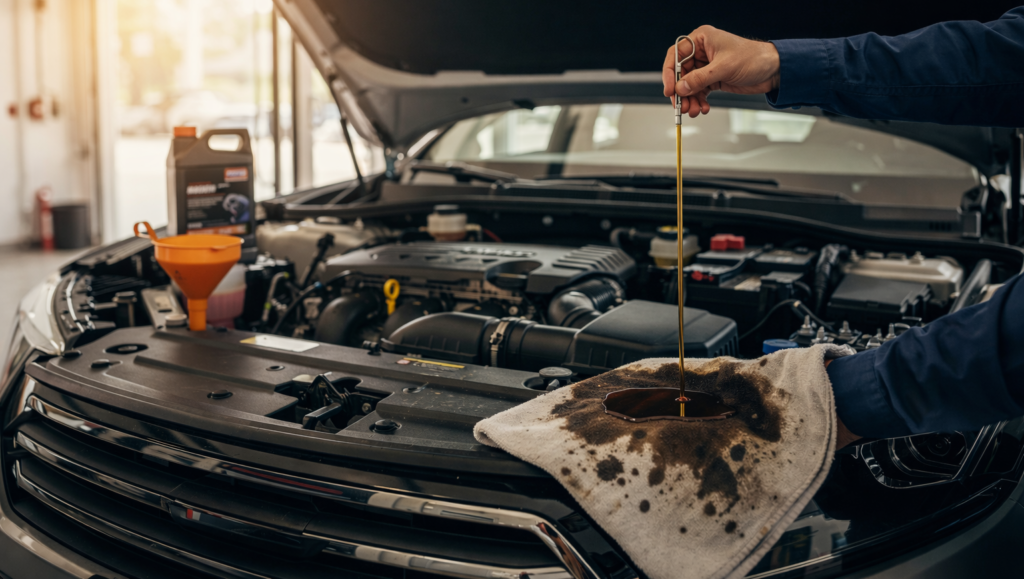
1️⃣ Delaying Engine Oil Changes
This is the #1 turbo killer.
Turbochargers depend entirely on clean, high-quality oil for lubrication and cooling.
Old or contaminated oil can cause:
- Shaft wear
- Oil passage blockages
- Increased internal friction
- Overheating
✅ Always follow the recommended oil change intervals.
✅ Use fully synthetic oil that meets manufacturer specifications.
2️⃣ Shutting Off the Engine Immediately After Hard Driving
After highway driving or aggressive acceleration:
- The turbo is extremely hot
- Oil is circulating at high speed
Turning off the engine immediately stops oil flow while the turbo is still hot.
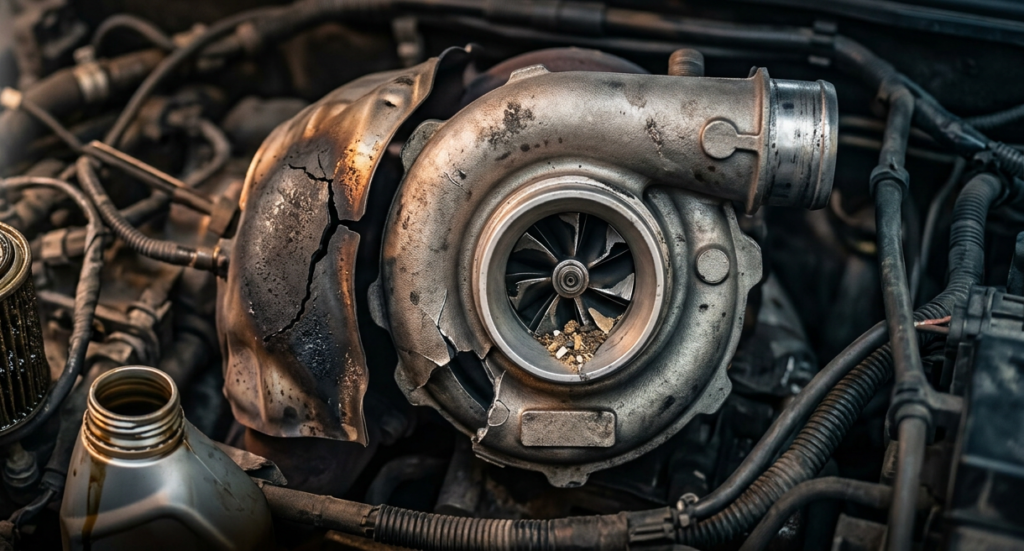
This can cause oil to burn and form carbon deposits (coking) inside the turbo.
✅ Let the engine idle for 1–2 minutes before shutting it off after heavy driving.
3️⃣ Using the Wrong Oil Type
Not all oils can withstand turbo temperatures.
Low-quality or incorrect viscosity oil may break down quickly under heat.
✅ Always use:
- Fully synthetic oil
- Manufacturer-recommended viscosity
- Oil rated for turbocharged engines
4️⃣ Ignoring the Air Filter
A dirty or damaged air filter allows debris to enter the turbo system.
At high rotational speeds, even small particles can:
- Damage turbine blades
- Cause imbalance
- Lead to vibration and premature wear
✅ Replace the air filter regularly.
5️⃣ Driving Aggressively When the Engine Is Cold
When starting a cold engine, oil takes time to circulate properly.
Revving hard immediately after startup can cause:
- Insufficient lubrication
- Premature turbo shaft wear
✅ Allow the engine to warm up for at least a minute before aggressive driving.
6️⃣ Ignoring Oil Leaks
Any oil leak in the lubrication system can directly affect turbo performance.
Common signs:
- Blue smoke from the exhaust
- Sudden oil consumption
- Oil spots under the vehicle
Ignoring oil leaks can result in turbo seizure.
7️⃣ Improper ECU Remapping (Tuning)
Poor-quality tuning can increase turbo boost pressure beyond safe limits.
This may cause:
- Excessive heat
- Overboost conditions
- Turbo over-speeding
- Engine damage
Always choose professional tuning services.
⚠️ Signs of a Failing Turbocharger
Watch for these warning signs:
🔴 Loss of power
🔴 Whining or high-pitched noise
🔴 Blue or black exhaust smoke
🔴 Increased oil consumption
🔴 Check Engine Light
🔴 Slow acceleration
If you notice any of these symptoms, immediate inspection is recommended.
🛠 How to Extend Your Turbo’s Lifespan
Follow these expert tips:
✔ Change engine oil regularly
✔ Use high-quality synthetic oil
✔ Allow cooldown time before shutting off
✔ Replace air filters on schedule
✔ Avoid aggressive driving on a cold engine
✔ Perform regular inspections
With proper maintenance, a turbocharger can last hundreds of thousands of kilometers.
💰 What Happens If a Turbo Fails?
Turbo failure can lead to:
- Significant power loss
- Oil entering the combustion chamber
- Engine damage in severe cases
- Expensive repair or replacement costs
Preventive maintenance is always cheaper than replacement.
📊 Are Turbo Engines Less Reliable?
Not necessarily.
Modern turbo engines are highly reliable — if properly maintained.
The turbo itself isn’t weak.
Neglect is the real problem.
💡 Expert Advice from DrMechaNest
Treat your turbocharger with care.
Routine maintenance, proper oil, and smart driving habits can dramatically extend its lifespan.
Remember:
Preventive care costs far less than replacing a turbocharger