Despite the rapid shift in the automotive industry toward electric and hybrid power, V8 engines continue to hold a special place in the world of high-performance sports cars. Recent developments suggest that these engines may be entering a new phase, following years of predictions that they would gradually disappear due to stricter emissions regulations and efforts to reduce fuel consumption.
Automakers are currently adopting different strategies to address the future of internal combustion engines. While some brands are focusing on developing fully electric vehicles, others continue to invest in V8 engines, either by improving their efficiency or integrating them with advanced electric systems to deliver higher levels of power and performance.
These developments do not necessarily mean that V8 engines will return to the widespread popularity they enjoyed in the past. However, they confirm that this engine configuration remains an important part of the sports car and supercar segments, particularly for customers who value mechanical performance, distinctive engine sounds, and a traditional driving experience.
Why Do V8 Engines Remain Important in Sports Cars?
V8 engines feature an engineering layout consisting of eight cylinders arranged in two banks. This configuration allows them to generate high levels of horsepower and torque while delivering strong responsiveness suited to sports cars and track-focused models.
Their appeal lies in their ability to provide powerful acceleration, as well as a distinctive exhaust note that has become part of the identity of several iconic sports cars. Their power delivery and torque characteristics also create a unique driving experience, making V8 engines a preferred choice among many automotive enthusiasts.
Although electric motors can deliver instant torque and impressive acceleration, some customers do not judge performance based on figures alone. They also value engine response, sound, and the overall interaction between the driver and the vehicle.
Automakers Are Not Giving Up on V8 Engines Easily
Several global automakers continue to offer V8 engines in their sports cars while working to develop them to meet modern performance requirements.
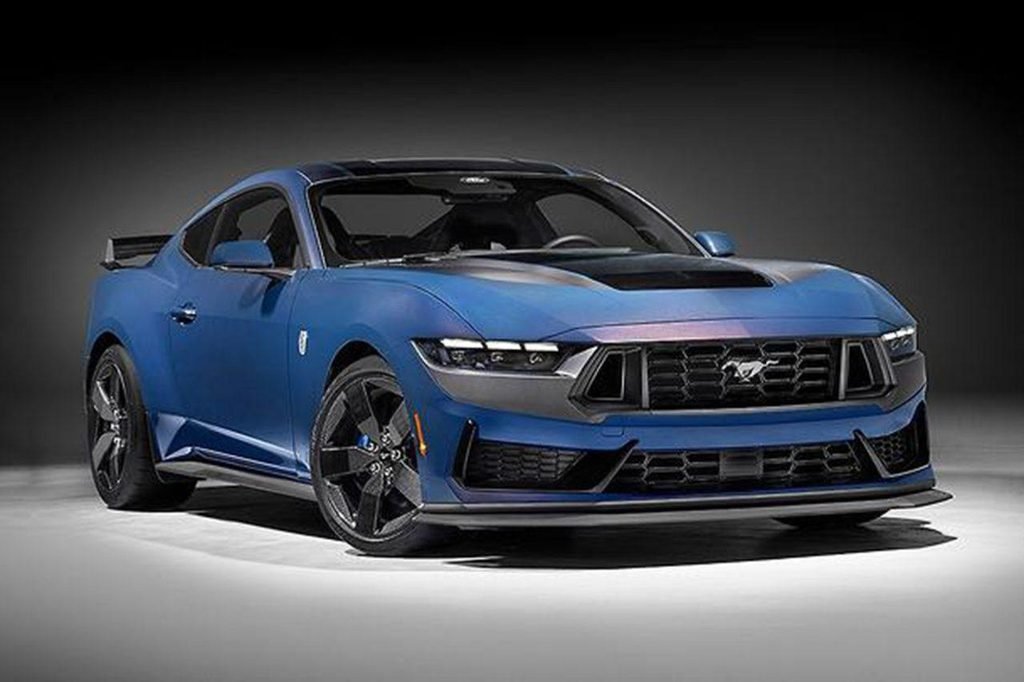
The Ford Mustang is one of the clearest examples of this trend. The 2026 Mustang GT is available with a 5.0-liter V8 engine producing up to 480 horsepower, while output increases to 500 horsepower in the Dark Horse version. Ford also offers the Dark Horse SC, powered by a supercharged 5.2-liter V8 engine producing up to 795 horsepower, according to the company’s published specifications.
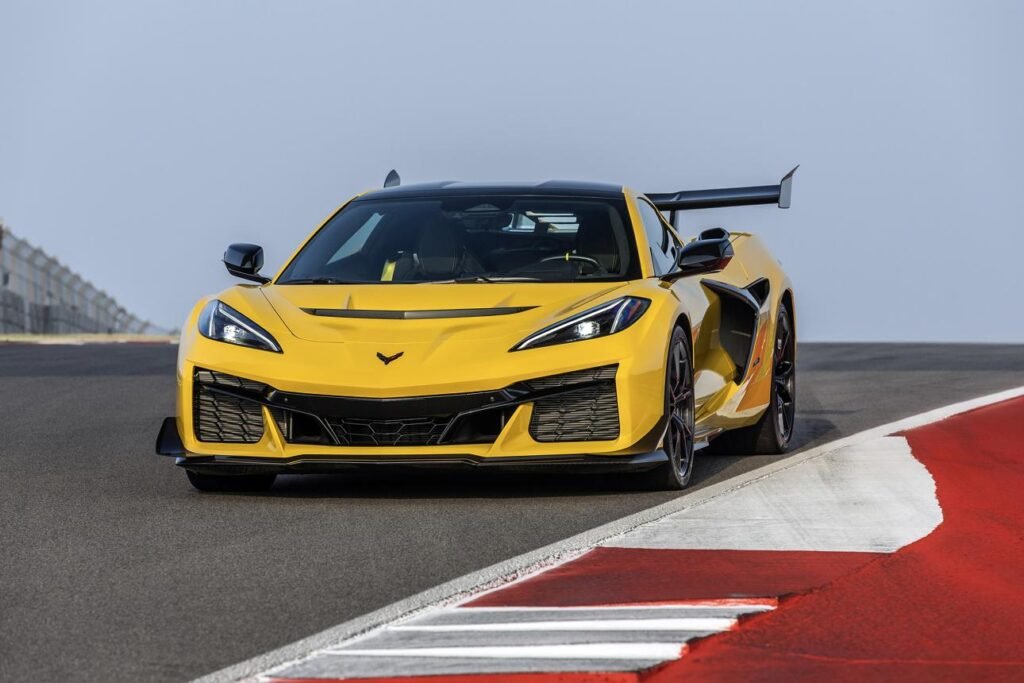
Chevrolet also continues to rely on V8 engines across the Corvette lineup, which includes several versions targeting different performance levels. The Corvette Z06 uses a 5.5-liter V8 with a flat-plane crankshaft, producing up to 670 horsepower.
Meanwhile, the Corvette ZR1 is powered by a twin-turbocharged 5.5-liter V8 engine generating up to 1,064 horsepower.These models demonstrate that V8 engines remain competitive in the sports car segment, whether through naturally aspirated engines or configurations equipped with turbochargers and superchargers.
٧The Return of Hybrid V8 Engines: A New Direction in Performance
One of the key developments that could shape the future of V8 engines is their integration with electric systems, rather than relying on them as standalone powertrains as was common in many traditional vehicles.
This technology combines the power of an internal combustion engine with the instant response of electric motors. It can also help improve fuel efficiency and reduce emissions compared with some conventional engines delivering similar performance levels.
Chevrolet provides a clear example of this approach with the Corvette ZR1X. The model combines a 5.5-liter twin-turbocharged V8 engine with a front electric drive unit, delivering a claimed total output of 1,250 horsepower and featuring an all-wheel-drive system.
High-performance hybrid cars also demonstrate that electric power does not necessarily have to replace internal combustion engines. Instead, it can serve as a supporting technology that enhances their capabilities, particularly during acceleration and when exiting corners.
Lotus Reveals a Powerful New Hybrid V8 Engine
Another notable indication that investment in this type of engine is continuing came in November 2026, when Horse Powertrain announced its new HORSE W40 engine. This 4.0-liter V8 was developed specifically for high-performance hybrid platforms.
According to the company’s published specifications, the engine produces more than 500 kW, equivalent to approximately 670 horsepower, with maximum torque reaching 800 Nm. It weighs around 200 kilograms.
The engine is expected to become part of an integrated hybrid powertrain in the future Lotus Type 135, working alongside an eight-speed dual-clutch transmission called the HORSE 8LDCT, which supports torque of up to 1,050 Nm.
This development shows that V8 engine development has not stopped. Instead, it is moving toward designs that are more closely integrated with electric systems, aiming to deliver high performance while benefiting from modern technologies.
Can V8 Engines Compete with Electric Cars?
Electric vehicles offer several advantages that make them strong competitors in the high-performance segment. These include instant torque, rapid acceleration, and the absence of the need for conventional gear changes in many models.
However, comparing electric cars with V8-powered vehicles is not simply a matter of horsepower and acceleration. The driving experiences are fundamentally different. Many car enthusiasts still prefer engine sound, the gradual rise in engine speed, and the mechanical sensation associated with acceleration and gear changes.
On the other hand, V8 engines face challenges related to fuel consumption, emissions, weight, and manufacturing costs. These factors are encouraging automakers to develop hybrid systems and improve engine efficiency rather than relying exclusively on traditional designs.
As a result, electric vehicles are likely to continue expanding in the sports car market, particularly in segments focused on acceleration and technology. Meanwhile, V8 engines are expected to retain their place in luxury cars, supercars, and models aimed at enthusiasts who appreciate traditional performance.
What Is the Future of V8 Engines in the Coming Years?
Current developments suggest that the future of V8 engines will not depend on a return to the mass production levels seen in previous decades. Instead, they are likely to remain available in specific vehicle segments where automakers can justify the development costs and meet customer expectations.
The use of turbochargers, hybrid systems, and advanced energy management technologies is expected to increase, helping improve performance while reducing fuel consumption and emissions.
New V8 engines may also be designed from the outset to work alongside electric motors and hybrid transmissions.At the same time, electric vehicles will remain a major option for manufacturers seeking to deliver high performance through modern propulsion technologies. This means the future of sports cars may involve the coexistence of several powertrain types rather than the complete dominance of a single technology.
Is the Era of V8 Engines Over?
The answer is no, but their role is changing as the automotive industry evolves. V8 engines are no longer the primary choice across most vehicle segments, yet they remain strongly present in several sports cars and supercars. The emergence of new engines designed to operate within hybrid systems also confirms that automakers continue to invest in this technology.
Rather than disappearing completely, V8 engines may enter a new phase that combines traditional performance with electric technology. This will allow them to remain an important option for enthusiasts who value power, distinctive sound, and character, even as electric vehicles continue to spread around the world.
Conclusion
Ultimately, V8 engines do not appear to be disappearing from the sports car world anytime soon, despite the rapid expansion of electric and hybrid vehicle development. These engines still have a large fan base that appreciates their power, performance, and distinctive sound. Moreover, automakers’ efforts to integrate them with electric technologies are creating new opportunities for their continued development.In the coming years, the role of V8 engines is expected to evolve, with greater reliance on hybrid systems and efficiency-enhancing technologies rather than traditional internal combustion power alone. Therefore, the future of sports cars may not be defined by a choice between electricity and gasoline, but rather by the coexistence of both technologies to deliver driving experiences that combine strong performance with modern innovation.
Frequently Asked Questions
Will V8 engines disappear because of the growing popularity of electric cars?
V8 engines are not expected to disappear completely in the near future. However, they may become less common and remain primarily available in sports cars, supercars, and luxury vehicles, with more efficient versions being developed to comply with emissions regulations.
What makes V8 engines popular among sports car enthusiasts?
V8 engines are known for producing high levels of horsepower and torque, along with their distinctive sound and strong acceleration response. They also deliver a mechanical driving experience that many high-performance car enthusiasts continue to appreciate.
Are hybrid V8 engines better than traditional V8 engines?
Hybrid V8 powertrains combine the power of an internal combustion engine with the instant response of electric motors. This can improve acceleration and overall performance while potentially reducing fuel consumption and emissions compared with some conventional engines.